Mark's Telescopes
I currently have telescopes with apertures of 50mm, 60mm, 70mm, 80mm, 102mm, 150mm, 200mm and 250mm.
I think it is a nice range of apertures. :-)

The Celestron 6 inch f/10 Schmidt-Cassegrain on the Evolution mount in its alt-az
configuration is great to take out to the backyard for general observing.
I also use it with the wedge, an f/6.3 reducer/corrector and a Nikon D5600 for astrophotography.
The Evolution mount is very nice. It can nicely track 20 to 30 second unquided exposures
in either alt-az or equatorial mode. I've had the 6 inch since 2018.
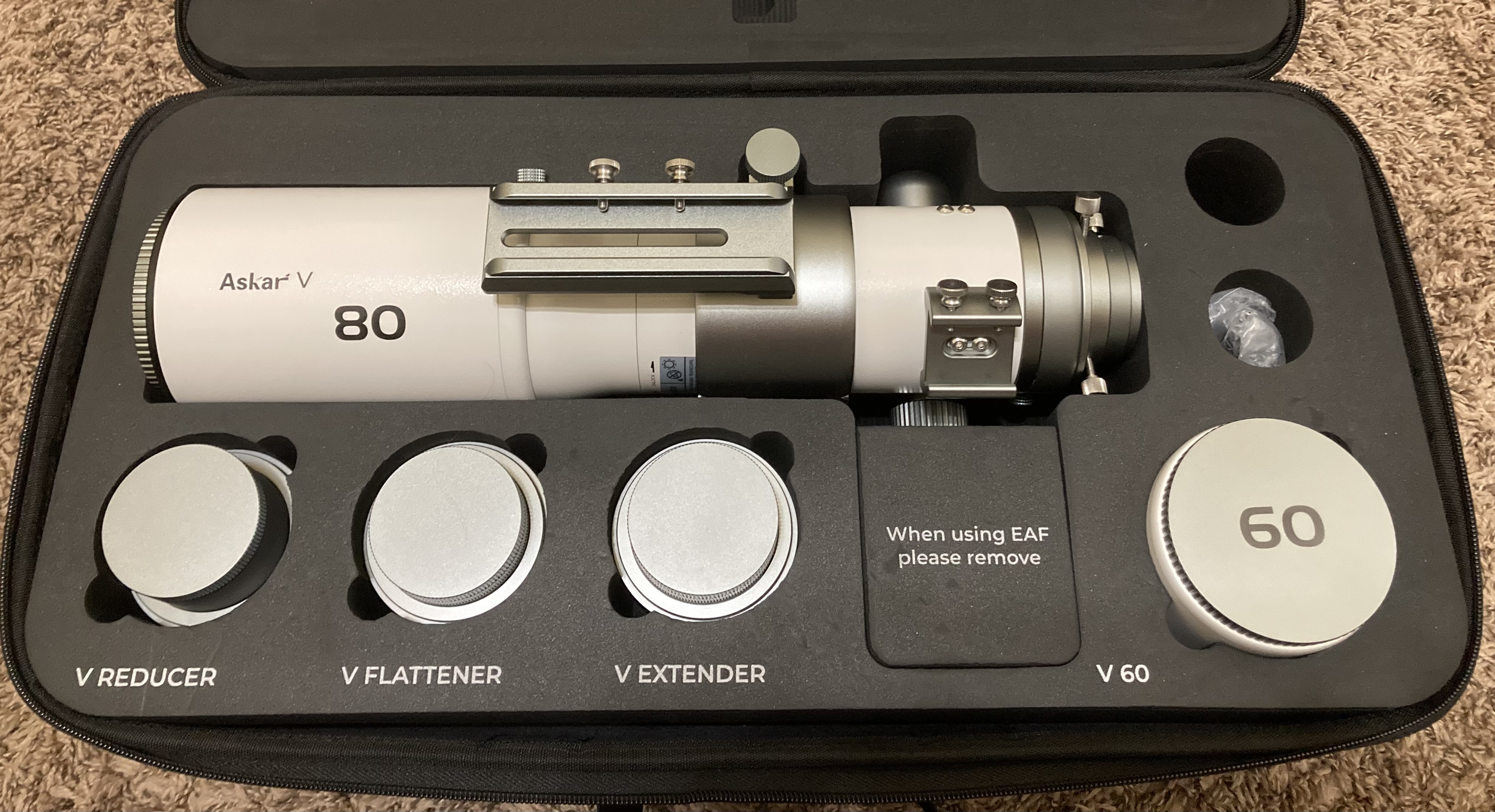
The Askar V 60mm and 80mm Refractor System includes a reducer, flattener and extender that work with both aperatures.
The Askar V fits nicely on the Celestron Evolution mount in any of the six configurations.
I am impressed with the sharpness and color correction of the Askar V optics.
It works very well with a ZWO ASI585MC for basic astrophotography. I purchased the Askar V System in 2025.
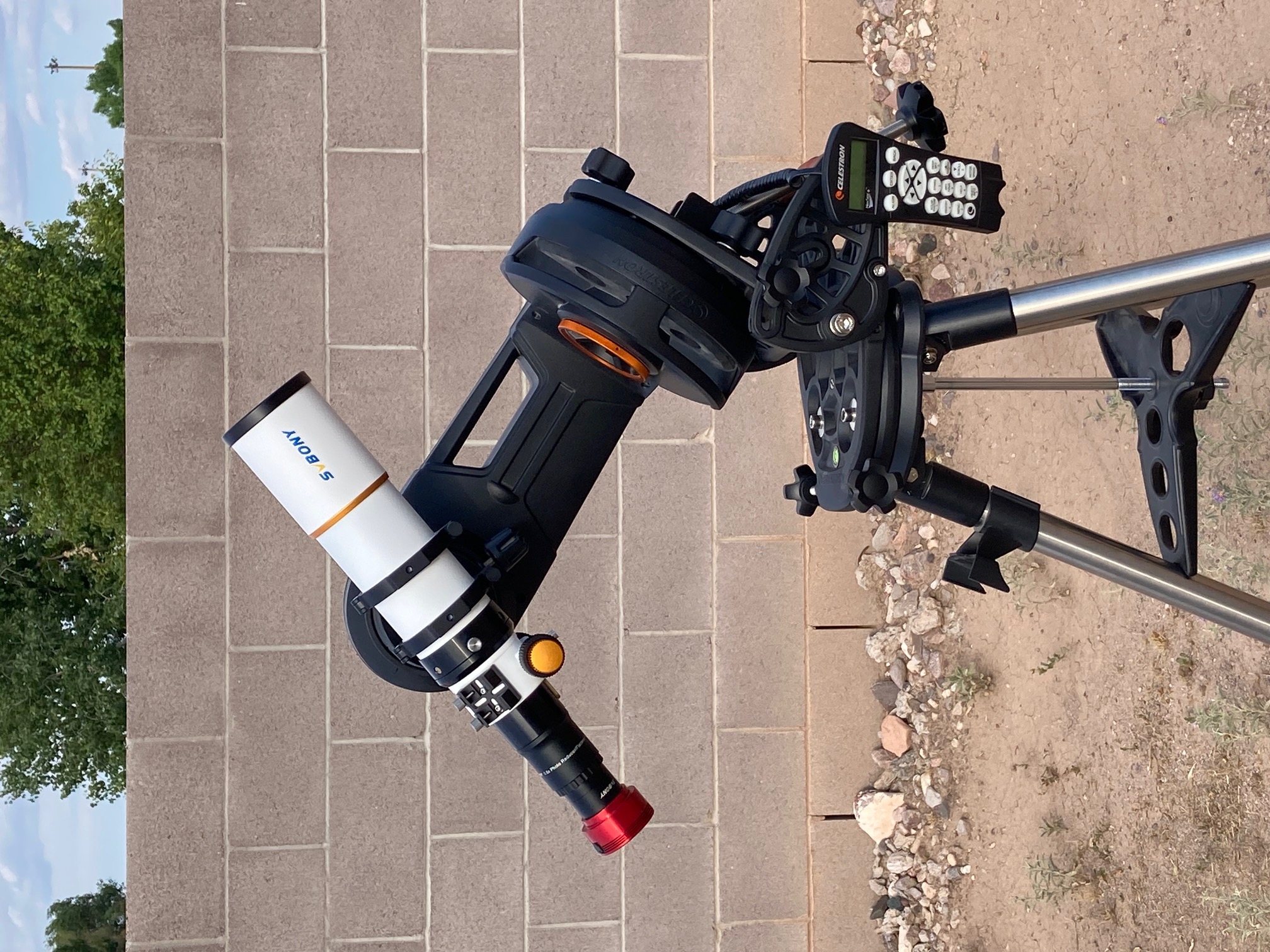
I use the SVBony 70mm ED f/6 with an f/4.8 reducer/flattener
and a ZWO ASI224MC for Electronically Assisted Astronomy (EAA).
Using ASI Studio live stacking software and 5 to 10 second exposures
I can get a nice EAA image of deep sky objects in 5 to 10 minutes.
I've had the SVBony 70mm since 2022.

I bought the Orion 102mm Mak-Cass with an EQ-2 equatorial mount in early 2004 to have
a portable scope to take to the Transit of Venus in Italy in June 2004. I made a solar filter
for the 102mm out of Baader AstroSolar film. The scope performed wonderfully during two transits of Venus.
I've also used it for two annular solar eclipses, and I still use it for solar observing.
It is also a good grab and go scope for the Moon and planets.
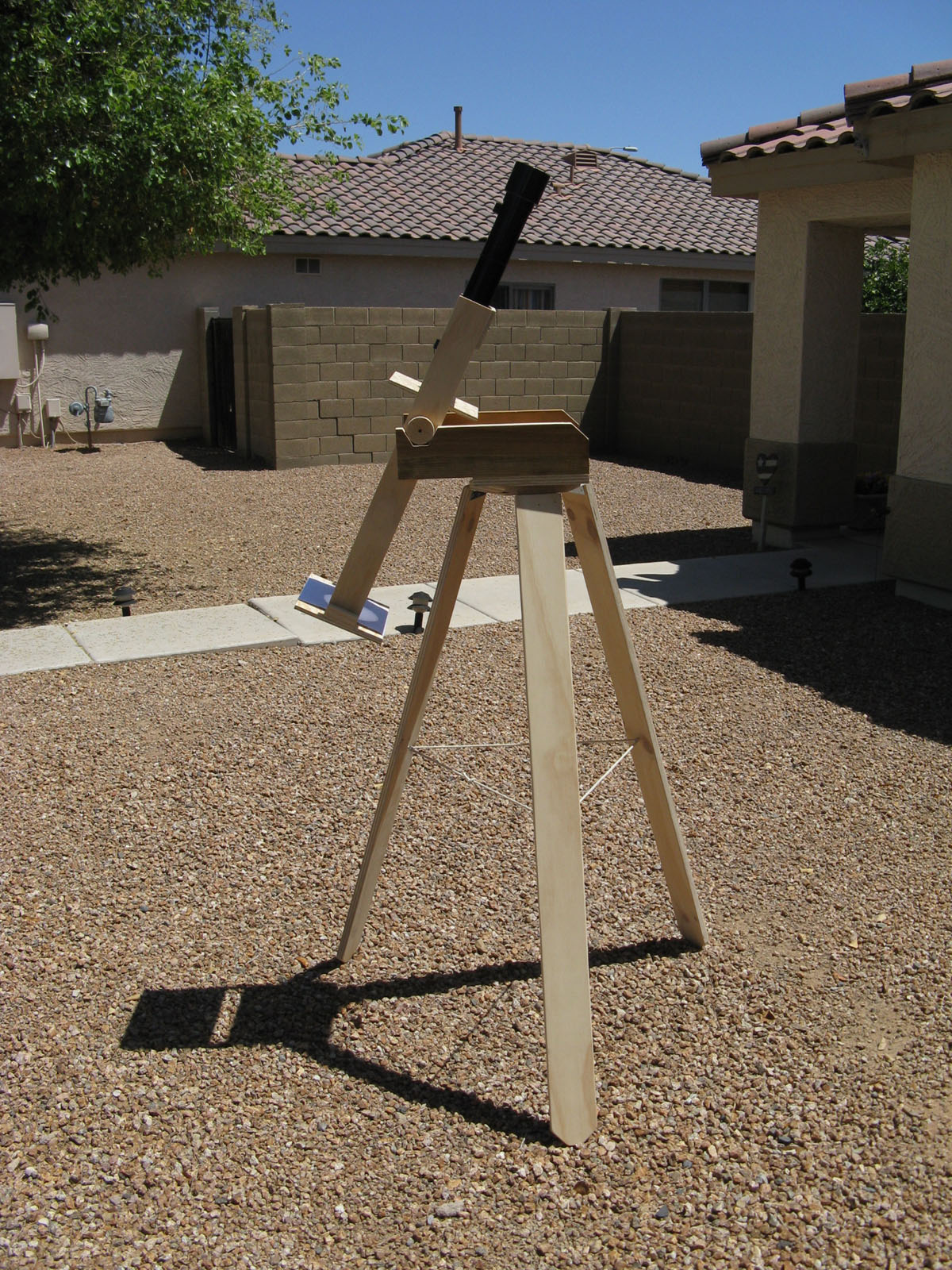 I bought this 50mm Galileoscope in 2009 as part of the International Year of Astronomy.
You could buy Galileoscopes for $15 and donate them for $12.50. I bought one for me, one for my niece,
and donated two. I also built a solar projection rig and tripod for the Galileoscope.
It projects an excellent image of the Sun with a 10mm eyepiece.
I've used the Galileoscope during two annular solar eclipses and a few more partial eclipses.
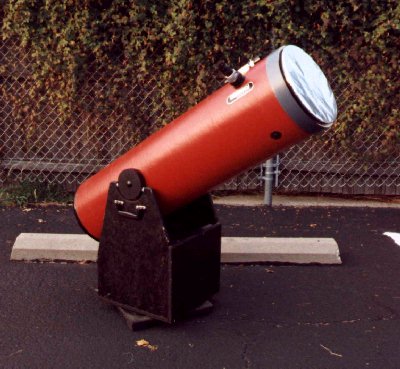 This is my 10" f/4.5 Coulter Odyssey Compact. I've had it since October 1992.
This scope gives very good views of deep sky objects.
I've starhopped to over 600 different deep sky objects with this telescope.
I also use it with the full aperature Tuthill Solar Skreen solar filter for viewing the Sun.
Both Coulter and Tuthill are long out of business. These are getting to be antiques.
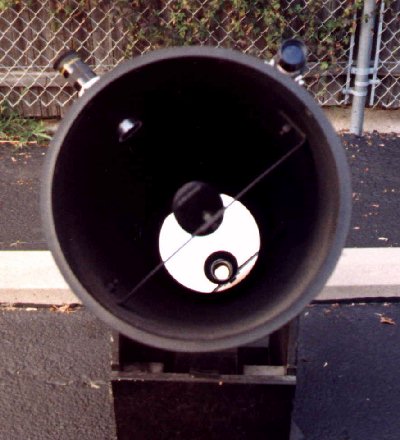 Here's a look at the Odyssey's business end.
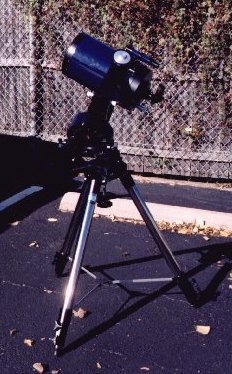 This is my 8" f/10 Meade 2080B. It has nice optics with good contrast.
I like to use the 8" for viewing and imaging planets and for splitting double stars.
I also use it, unguided, for astrophotography, and it works.
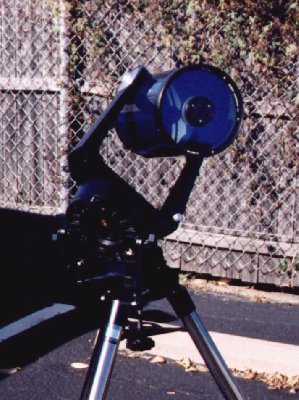 Here's a look at the Meade's business end.
I've had the 2080 since November 1993.
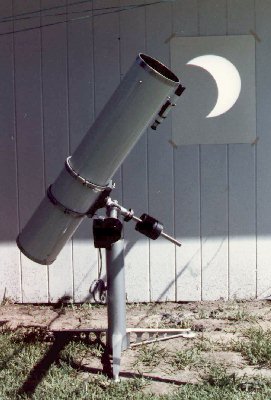 My first telescope was this Meade Model 826, an 8" f/6 Newtonian on a German equatorial mount.
It was a very good scope. I bought it in August 1983 and sold it in 1991.
The first object I found with it was M57, the Ring Nebula.
This picture shows an eyepiece projection of the May 1984 solar eclipse.
Return to Astronomy Page